


Are Artisan Textile Makers Worth Supporting?
Last Updated: October 28, 2026
Quick Summary
Supporting artisan textile makers preserves traditional skills and cultural heritage while keeping fair-wage rural jobs alive, because a craft survives only when someone can earn a living from it. Their handmade cloth also carries honest imperfections, like block offsets, that machine production cannot replicate.
- Small block offsets where one block met the next are evidence a print was placed by hand.
- Ask who made a textile, where, and what technique was used before you buy.
- Buy fewer pieces, repair before replacing, and treat a visible block offset as a signature.
- Scaling too fast is the most common way artisan production breaks, so accept limits.
- Noble Misfit's Ajrakh full sleeve shirt is 100% pure cotton, designed in Toronto and made in India.
Table of Contents
- Why Supporting Artisan Textile Makers Matters
- The Benefits of Handmade Textiles for Makers and Communities
- How to Identify Handmade Textiles Before You Buy
- How to Support Textile Artisans Beyond the Purchase
- What Makes Artisan Textiles Different from Fast Fashion
- The Limits of Artisan Production, and Why Responsible Scaling Matters
- Building a Wardrobe That Works Between Two Worlds
- Frequently Asked Questions
Why Supporting Artisan Textile Makers Matters
The benefits of supporting artisan textile makers start with a simple fact: every hand-printed cloth carries the time of the person who made it. At Noble Misfit, we build our entire collection around that idea.
Artisan textile makers are skilled craftspeople who print, dye, weave, or finish cloth by hand rather than through automated production lines. Their work depends on trained hands, inherited technique, and materials that behave honestly.
Below, we'll show you how to spot real handwork before you spend money.
The Benefits of Handmade Textiles for Makers and Communities
Handmade textiles deliver benefits on two fronts at once: they preserve knowledge that cannot be uploaded anywhere, and they move money into places that rarely see it. That combination is why the choice matters more than the price tag suggests.
Keeping Traditional Skills and Cultural Heritage Alive
A craft survives only if someone can earn a living from it. When hand block printing pays, a printer teaches the next person the sequence of resist paste, dye, and wash. When it doesn't, the knowledge leaves with the last person who practiced it. Traditional craftsmanship is a chain of transferable skill, not a museum piece, and cultural heritage survives through wages rather than archives.
Fair Wages, Local Jobs, and Stronger Rural Economies
Artisan work is frequently rural work. Fair compensation for a printer, a dyer, or a finisher keeps employment in communities where alternatives are thin, and that spending circulates locally. Ethical production starts with the person holding the block. Humane working conditions and consistent orders do more for community resilience than any awareness campaign.
How to Identify Handmade Textiles Before You Buy
You can identify handmade textiles by looking for small, repeatable irregularities: block offsets. But visual cues alone won't tell you whether the maker was paid fairly or whether the technique is what the label claims.
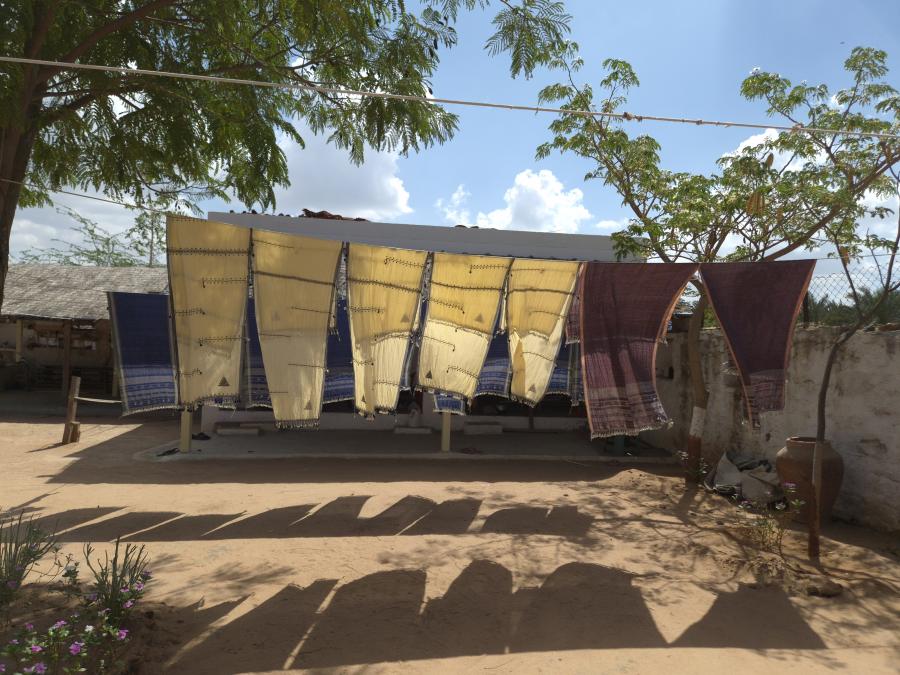
Reading the Cloth: Block Offsets, Natural Dyes, and Honest Imperfections
On a dense Ajrakh print, small offsets where one block met the next are evidence it was placed by hand. Our guide to identifying authentic hand blocked textile quality goes deeper on what to check before you commit.
Questions That Reveal Whether a Maker Was Paid Fairly
Visual inspection tells you how a textile was made, not how the maker was treated. Ask these questions before you buy:
- Who made this and where? A specific workshop name, region, or artisan group is a good sign. 'Made in India' alone is not.
- What technique was used? Block printing, handloom weaving, and embroidery are distinct skills. A brand that can name the technique likely knows its supply chain.
- How long did it take? Hand block printing a single metre can take hours across multiple rounds. If the answer is vague, the labor may be obscured.
- What does the maker earn? Few brands publish wage data, but those that do, or that work with recognized fair trade federations, offer more accountability.
- Can I see the workshop? Photos, videos, or visit reports from the production site are stronger than generic 'artisan-made' claims.
Transparency Checks: Certifications and Red Flags
Our guide to identifying authentic hand blocked textile quality covers more on what to look for in the cloth itself. For a broader view of how ethical claims stack up across brands, see our roundup of ethical fashion brands and Indian craftsmanship.
These questions help reveal whether a maker was paid fairly before you buy.
| Question to ask | What a good answer looks like |
|---|---|
| Who made this and where? | A specific workshop name, region, or artisan group |
| What technique was used? | Block printing, handloom weaving, or embroidery named clearly |
| How long did it take? | Hours across multiple rounds for a single metre |
| What does the maker earn? | Published wage data or recognized fair trade federations |
| Can I see the workshop? | Photos, videos, or visit reports from the production site |
How to Support Textile Artisans Beyond the Purchase
Supporting textile artisans continues long after checkout, and the habits are unglamorous. Buy fewer pieces and wear them harder. Ask brands where the cloth was printed and who printed it, then notice whether the answer is specific.
Ajrakh Women's Full Sleeve Shirt - Red →
Practical Ways to Support Makers
- Buy from labels that name the technique and the region. A brand that says 'hand block printed in Rajasthan' is more accountable than one that says 'artisan-made.'
- Repair before replacing. A lost button, a small tear, or a faded patch can often be fixed. Learning basic mending or using a repair service extends a garment's life and keeps it out of landfill.
- Ask about care before you buy, not after. Knowing how to wash and store a hand-printed textile prevents damage and preserves the maker's work.
- Treat a visible block offset as a signature, not a defect. This shifts the value proposition from factory perfection to human craft.
- Research provenance. Look for brand transparency reports, artisan stories, or supply chain disclosures. If a brand publishes none, ask why.
- Share maker stories with permission. If you visit a workshop or learn about a technique, ask before posting photos or personal details. Respectful storytelling amplifies artisans without exploiting them.
- Choose repair over replacement. Find a local tailor or textile repair service. Many dry cleaners also offer mending.
- Advocate for transparency. Leave reviews that ask about sourcing, or contact brands directly with questions. Consumer pressure encourages better practices.
Our guide to caring for hand printed clothing covers washing and storage in detail.
How to Research Provenance and Verify Ethical Claims
When you find claims, check for specificity. 'Handmade' is vague; 'hand block printed by a family workshop in Bagru' is specific. 'Eco-friendly' is vague; 'natural indigo dye, GOTS-certified organic cotton' is specific. Specificity is not a guarantee, but it is a sign that a brand has done the work to know its supply chain.
The Role of Repair and Care in Sustaining Craft
Care practices also matter. Hand-printed and natural-dyed textiles often soften and improve with gentle washing. Avoiding harsh detergents and high heat preserves both the cloth and the print. Store folded, away from direct sunlight, and air garments between wears rather than washing after every use.
Sharing Stories Without Exploitation
For a deeper look at how brands can collaborate ethically with artisans, see our roundup of ethical fashion brands and Indian craftsmanship.
What Makes Artisan Textiles Different from Fast Fashion
The difference between artisan textiles and fast fashion comes down to how the cloth is made and who decides. That is why handmade clothing costs more: repeated dyeing rounds, drying time between stages, and skilled labor are built into the garment.
The Limits of Artisan Production, and Why Responsible Scaling Matters
Watch out: scaling too fast is the most common way artisan production breaks. When orders outrun a workshop's capacity, corners get cut first on drying time and wash rounds, which is exactly where quality lives. Responsible scaling means accepting limits, planning drops in smaller runs, and paying for the time the craft requires. A limited piece with no restock is a feature of honest production, not a marketing tactic.
Building a Wardrobe That Works Between Two Worlds
The real payoff of supporting artisan textile makers is a wardrobe that stops separating heritage from daily life. You should not need one closet for occasions and another for work.
That is the idea behind our Ajrakh women's full sleeve shirt in red, cut from 100% pure cotton and hand block printed through repeated rounds of resist, dye, and wash. The print sits dense enough that the block offsets read clearly, which is the point. Designed in Toronto and made in India, it runs big so you can size down, and it layers under a knit in fall or over a cami in summer. If you want to see which labels genuinely work with Indian craftspeople, our roundup of ethical fashion brands and Indian craftsmanship is the place to start.

Frequently Asked Questions
What are the benefits of supporting artisan textile makers?
Buying from artisan textile makers supports traditional skills like hand block printing. Noble Misfit's Ajrakh Women's Full Sleeve Shirt - Red is hand block printed, and its listing describes the repeated rounds of resist paste, dyeing, and washing involved.
How can I tell whether a textile product is genuinely handmade?
Look for small irregularities: on a dense Ajrakh print, offsets where one block met the next are evidence it was placed by hand. Ask where the piece was made and what technique was used.
How can shoppers support textile artisans ethically?
Buy pieces designed for everyday wear. Noble Misfit's collection brings traditional Indian textile craftsmanship into contemporary everyday style.
Can traditional textile techniques fit into everyday clothing?
They can. Noble Misfit builds its collection around this idea, with contemporary apparel that blends traditional Indian textile craftsmanship with modern everyday style. The concept of between two wardrobes means you do not have to choose between heritage and daily life.
The challenge is that most wardrobes still force a choice between clothing that feels like heritage and clothing that fits a modern week. At Noble Misfit, we design apparel around traditional Indian textiles, hand printed using traditional block methods, and cut for everyday wear rather than special occasions. Each piece is made to mix with what you already own, so your roots and your routine stop competing. Get started with Noble Misfit and build a wardrobe that carries both.


