


Ethical Fashion Brands with Indian Craftsmanship: 2026 Guide
Table of Contents
- Why Ethical Fashion Brands with Indian Craftsmanship Matter Now
- Quick Comparison: Ethical Indian Clothing Brands to Know
- 1. Noble Misfit: Between Two Wardrobes, One Seamless Life
- 2. Understanding Indian Hand Block Print Clothing
- 3. How to Identify Ethical Fashion Brands (Without the Guesswork)
- 4. How to Care for Hand-Printed Clothing So It Lasts
- The Real Cost of Craft: Price, Value, and What You're Paying For
- Conclusion: Building a Wardrobe That Carries Its Story
- Frequently Asked Questions
Last Updated: October 21, 2026
Why Ethical Fashion Brands with Indian Craftsmanship Matter Now
Ethical fashion brands with Indian craftsmanship sit at a rare intersection: clothing that carries a real human hand and a supply chain you can actually trace. At Noble Misfit, we build around one idea, the concept of between two wardrobes. Most of us were raised with one set of clothes for home and heritage, another for work and the wider world. We think that split is unnecessary.
The gap this fills is practical. Fast fashion can print a paisley pattern in an afternoon. It cannot reproduce the repeated dye rounds of Ajrakh or the hand-inserted weft of a Jamdani border. Those techniques survive because someone is still willing to pay for the time inside them.
Below, we break down what to look for, which pieces earn their place, and how to keep them wearing well for years.
Quick Comparison: Ethical Indian Clothing Brands to Know
Here is how our own collection maps against the questions buyers ask most: what a piece costs, what craft it carries, and where it fits in a real wardrobe.
| Piece | Price (CAD) | Craft | Best For |
|---|---|---|---|
| Ajrakh Full-Sleeve Shirt, Red | $129 | Ajrakh hand block print | Work and weekend |
| Jamdani A-Line Skirt, Red or Blue | $109 | Jamdani weave | Office to evening |
| Sanganeri Crop Shirt | $129 | Sanganeri block print | Warm-weather layering |
| Ikat Maxi Dress | $219 | Ikat, two cloths joined | Weddings and events |
| Ajrakh Mini Skirt, Black | $119 | Ajrakh hand block print | After hours |
1. Noble Misfit: Between Two Wardrobes, One Seamless Life
Most guides to ethical Indian clothing brands treat heritage pieces as occasion wear. We take the opposite view. A hand-printed shirt should survive a Tuesday morning meeting, not wait in a garment bag for a wedding.

That is the whole premise behind between two wardrobes. You should not need a separate closet for your roots.
The Ajrakh Full-Sleeve Shirt: A Study in Patience
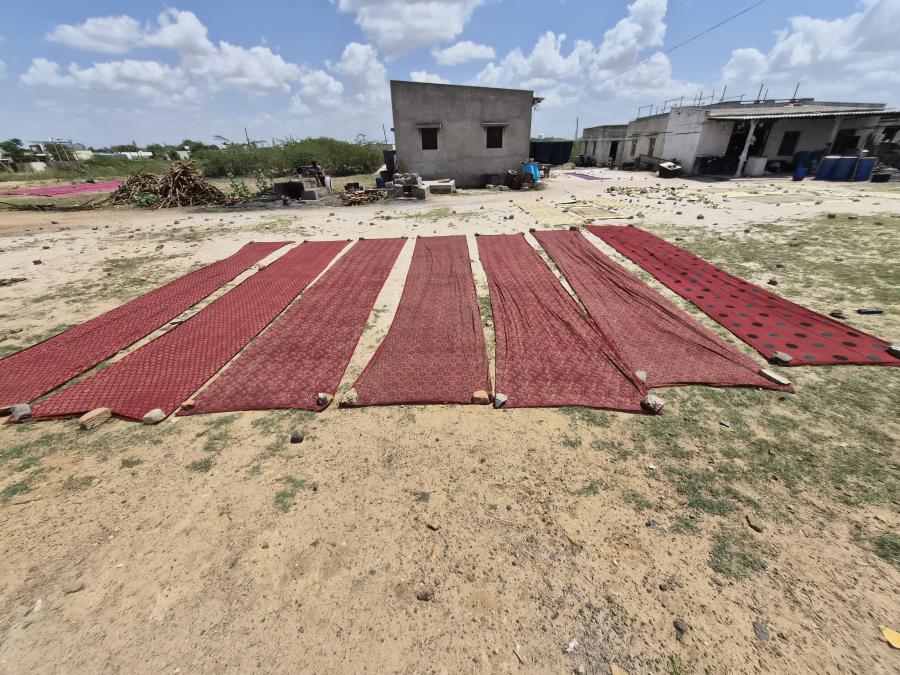
Ajrakh is among the most labor-dense printing traditions still practiced. The cloth passes through repeated rounds of resist paste, dyeing, and washing, one color at a time, dried between each stage. The depth of the red comes from dye reacting with cloth over successive rounds, not a single application.
Our Ajrakh Women's Full Sleeve Shirt in Red is 100% pure cotton at $129. It runs big, so buy a size smaller than usual. You will see small offsets where one block met the next. On a print this dense, that is the clearest evidence it was placed by hand.
Jamdani A-Line Skirts: Where the Hem Does the Talking
Jamdani puts the weaver's time where you see it first: the hem. A scattered butti takes minutes. A continuous figured border takes hours of hand-inserted weft across the full width.
The Jamdani A-Line Skirt in Red and the Blue version both sit at $109, with side seam pockets and an elastic back waist. Border placement varies piece to piece because the motif is built by hand, not repeated by machine.


2. Understanding Indian Hand Block Print Clothing
Indian hand block print clothing is fabric printed by pressing carved wooden blocks onto cloth by hand, one color and one pass at a time. Each color needs its own block and its own trip across the textile.
Three traditions show up most in everyday wardrobes:
- Ajrakh: resist paste, dye, and wash repeated in rounds. Deep, layered color.
- Sanganeri: fine floral repeats, built block by block, from the region around Jaipur.
- Batik: wax resist drawn or stamped before dyeing, leaving softer edges.
The tell is inconsistency. Machine printing repeats perfectly. Hand block printing drifts slightly, and the color deepens unevenly across the cloth. Our Sanganeri Crop Shirt at $129 shows this clearly: emerald ground, ochre florals, and a print that sits a little differently on every piece.
3. How to Identify Ethical Fashion Brands (Without the Guesswork)
Learning how to identify ethical fashion brands comes down to evidence, not adjectives. Words like "artisanal" and "conscious" cost nothing to print. Proof is harder to fake.
Ajrakh Women's Full Sleeve Shirt - Red →
Use this checklist before you buy:
- Does the listing name the specific craft, not just "handmade"?
- Is the fiber stated plainly, such as 100% cotton rather than a blend?
- Are the people and places behind the garment described?
- Does the brand explain why the price is what it is?
- Are production limits disclosed, or does everything restock endlessly?
- Do the photos show real texture and slight variation?
4. How to Care for Hand-Printed Clothing So It Lasts
Caring for hand-printed clothing means protecting dye and fiber at the same time. Natural dyes and cotton both reward gentle handling, and a few habits add years to a garment.
Wash cold, by hand or on a delicate cycle, and turn the piece inside out. Use a mild detergent without bleach. Dry in shade, never in direct sun, because UV fades natural color faster than washing does. Iron on the reverse at moderate heat.
Store folded rather than on a tight hanger to avoid stretching the shoulder. Treat a small stain immediately with cold water before it sets.
The Real Cost of Craft: Price, Value, and What You're Paying For
A $129 shirt is not competing with a $20 one, and pretending otherwise helps nobody. The honest comparison is cost per wear.
A hand-printed cotton shirt worn weekly across several seasons spreads its price across hundreds of wears. A cheap print that fades or pills after a handful of washes does not. Add the fact that these are limited runs with no restocks, and the piece becomes something you keep rather than replace.
What you are paying for is time: the rounds of dyeing, the hours at the block, the hand-finished border. That time is the product.
Conclusion: Building a Wardrobe That Carries Its Story
The harder question is not which brand to buy, but whether your wardrobe can hold both halves of your life at once. We built Noble Misfit on the belief that it can. Our pieces are hand-printed using traditional block methods, designed to mix with what you already own, and made to be worn daily rather than saved. Start with one piece, pair it with your existing blazers and denim, and see how quickly the two wardrobes become one.
Frequently Asked Questions
What should I look for in an ethical fashion brand?
Look for specific, verifiable details rather than vague claims. A brand should name the craft technique (Ajrakh, Jamdani, Sanganeri), the region it comes from, and the materials used. Check whether they explain how artisans are paid and whether production is small-batch. Transparent brands will tell you where pieces are made and designed, and they will not hide behind words like 'heritage-inspired.' Ask for evidence: photos of the process, named artisan communities, and a clear return policy that respects the cost of handmade goods.
How can I tell whether a brand supports traditional Indian craftsmanship?
Look for specificity. A brand that supports traditional craftsmanship will name the technique and the region, such as Ajrakh from Kutch or Sanganeri from Rajasthan. They will describe the process, like how many rounds of dyeing a cloth goes through or how a border is woven. They will also acknowledge imperfections: slight offsets in block printing or variations in motif placement are evidence of handwork, not flaws. If a brand cannot tell you who made the cloth or where, the claim is likely marketing.
What is the difference between handmade and hand-printed clothing?
Handmade means the garment was constructed by hand, which could include hand-stitching or hand-finishing. Hand-printed means the pattern was applied by hand, typically using carved wooden blocks and dye, rather than being digitally printed. A piece can be both handmade and hand-printed, or one and not the other. For example, a hand block printed shirt may be sewn on a machine but printed entirely by hand. Ask the brand to clarify which parts of the process are manual, because the terms are often used interchangeably when they should not be.
Can Indian craft-inspired clothing be worn every day?
Yes, if the design is cut for it. The key is versatility: pieces that mix with your existing wardrobe rather than requiring a separate set of accessories. A hand block printed shirt in a solid colour can pair with jeans or tailored trousers. A Jamdani A-line skirt works with a plain tee for weekends and a crisp shirt for work. Look for natural cotton, which breathes and creases honestly, and avoid pieces that feel too precious to wear. The goal is clothing that fits your life, not just your wardrobe.
How can I care for naturally dyed or hand-printed garments?
Wash separately in cold water for the first few washes, as natural dyes may release excess colour. Use a gentle detergent and avoid bleach or harsh chemicals. Turn the garment inside out before washing to protect the printed surface. Line dry in the shade, because direct sunlight can fade natural dyes over time. Iron on the reverse side on a low setting. Store folded rather than hung for knit or woven pieces to maintain shape. With proper care, hand-printed cotton improves with age, softening and settling into the cloth.
Ready to close the gap between the closet you inherited and the one you actually wear? Shop the collection at Noble Misfit and find the hand-printed piece that earns a place in your week, not just your wardrobe.


