


How to Tell if Clothing is Ethically Made
Table of Contents
- Check for Ethical Fashion Certifications
- Transparency in Clothing Supply Chains
- Benefits of Hand Block Printing and Artisanal Techniques
- Frequently Asked Questions
Last Updated: September 27, 2026
Check for Ethical Fashion Certifications
When you're trying to figure out how to tell if clothing is ethically made, look for third-party certifications that verify fair labor practices and sustainable production, these represent real audits and ongoing accountability.
Fair Trade ensures living wages; Global Organic Textile Standard (GOTS) tracks fiber and labor. Check the tag or brand website for a verification code you can confirm with the certifying body.
Not all ethical brands carry formal certifications, some smaller producers can't afford audit fees, so absence of certification doesn't mean unethical practices.
Transparency in Clothing Supply Chains
Understanding how to tell if clothing is ethically made starts with transparency, ethical brands disclose where garments are made, factory details, and sometimes artisans' names.
Brands hiding supply chains often have poor conditions to hide. Those showing factory photos, artisan stories, or production timelines are confident in their practices.
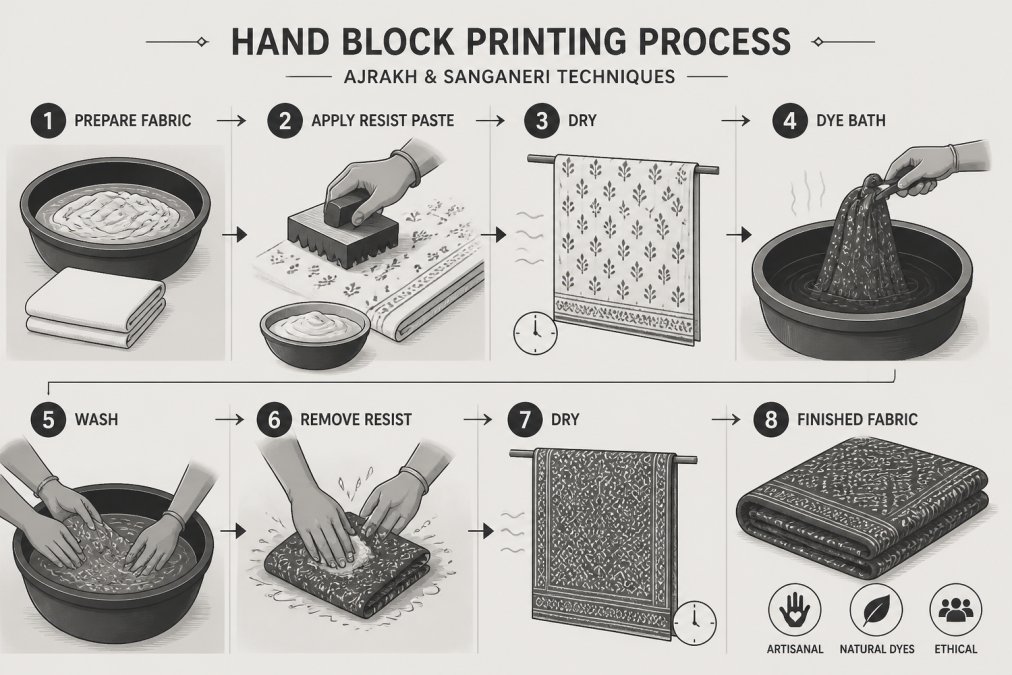
Hand block printing traditions like Ajrakh and Sanganeri are inherently transparent, these labor-intensive techniques require skilled artisans working for weeks on a single piece, and the hand-placed blocks, color variations, and imperfections prove human craftsmanship.

Benefits of Hand Block Printing and Artisanal Techniques
Hand block printing isn't just beautiful, it's inherently ethical. The process demands time, skill, and fair compensation. A single Ajrakh garment passes through repeated rounds of resist paste, dyeing, and washing. Each color layer builds depth that no machine can replicate.
This craft-first approach means:
- Artisans earn fair wages for specialized work
- Production timelines are honest (weeks, not hours)
- Quality and durability are built in, not compromised
- Each piece carries the maker's skill and intention
Sanganeri printing follows similar principles. The technique creates intricate patterns through hand-carved blocks and natural dyes. The result is clothing that lasts years, not seasons. When garments endure, you buy less. That's the real measure of ethical fashion.
Brands using these methods, like Noble Misfit, which produces hand-printed apparel designed for everyday wear, prove their commitment through their production choices. You're not just buying a shirt. You're investing in a craft tradition and supporting the artisans who keep it alive.

Look for these signals in hand block-printed pieces:
- Slight offsets where blocks meet (proof of hand placement)
- Color variation and natural dye depth
- Dense, intricate patterns that take weeks to complete
- Garments designed to mix with your existing wardrobe, not sit in a closet
- Transparent information about where and how they're made
Frequently Asked Questions
What certifications should I look for to ensure clothing is ethically made?
Look for third-party certifications like Fair Trade Certified and GOTS (Global Organic Textile Standard). These verify fair labor practices and organic fiber sourcing. Hand block printing traditions like Ajrakh carry inherent ethical value because they require skilled artisans and cannot be rushed through automation. When a brand transparently shares its certification status and supply chain details, that's a strong indicator of genuine ethical commitment.
How do hand block printing techniques like Ajrakh and Sanganeri support ethical fashion?
Hand block printing is labor-intensive by design, Ajrakh cloth passes through repeated rounds of resist paste, dyeing, and washing, one color at a time. This process cannot be mechanized, which means it directly supports skilled artisans and preserves traditional textile craftsmanship. Each piece reflects the hands, rhythms, and time of its making. Sanganeri and Ajrakh printing sustain living wage employment and cultural heritage, making them inherently more ethical than digitally printed synthetic alternatives.
What are red flags of unethical clothing production?
Be cautious of brands that cannot explain their supply chain, use vague language like 'ethically sourced' without certification, or offer prices too low to support fair wages. Fast fashion models that rely on rapid production cycles often cut corners on labor conditions and environmental practices. Avoid garments made from synthetic materials with digital printing, as these typically involve chemical-heavy processes and poor working conditions. Authentic ethical brands, like those using hand block printing methods, will openly share where and how their pieces are made.
Ethical fashion starts with asking the right questions. Check for certifications, demand supply chain transparency, and choose production methods that honor both artisans and the environment. Hand block printing traditions prove that beauty and ethics go together. When you wear clothing made with intention, you wear your values.


