


Style Traditional Textile Prints for Business Casual
Table of Contents
- Understanding Traditional Textile Prints in Professional Settings
- How to Wear Printed Shirts to Work
- Building Business Casual Outfits with Patterns
- What to Wear with a Printed Blouse
- Coordinating Colors Within and Across Prints
- Styling Printed Pieces Beyond the Office
- Frequently Asked Questions
Last Updated: October 17, 2026
Understanding Traditional Textile Prints in Professional Settings
The idea that traditional textile prints belong only in casual settings or special occasions is outdated. At Noble Misfit, we've spent years helping professionals integrate hand-printed textiles into their everyday work wardrobes.
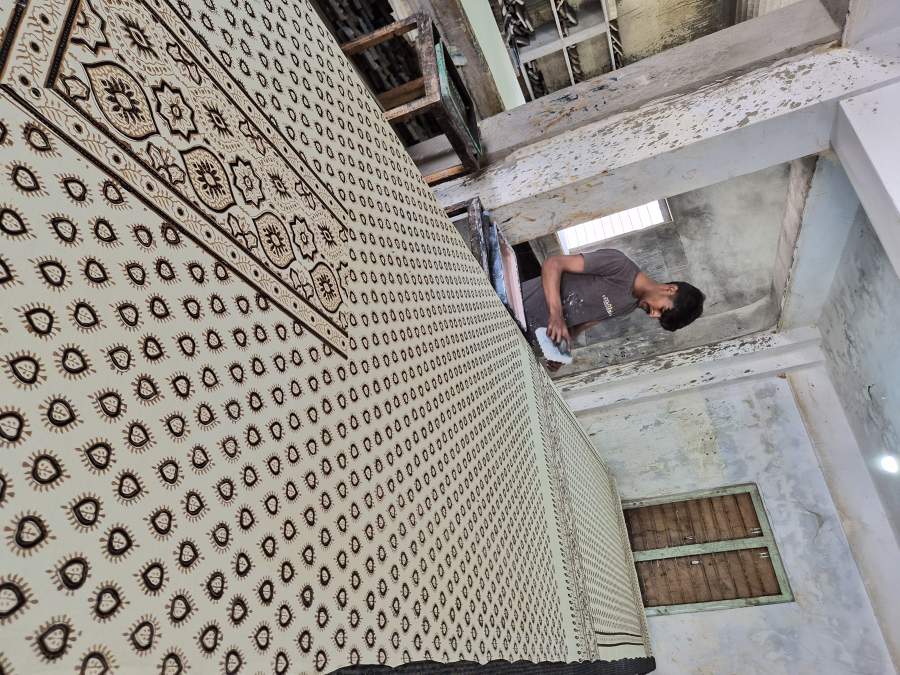
Hand-printed fabrics like Ajrakh and Sanganeri carry depth that mass-produced prints simply don't have. The layering of color, the slight variations in registration where one block meets the next, these aren't flaws. They're proof of craft.
The real shift happens when you stop thinking of these pieces as "ethnic wear" and start thinking of them as elevated garments. They're not costumes. They're investment pieces designed to work with what you already own.
Why Hand-Printed Textiles Work for the Office
Traditional textile prints have an inherent sophistication that reads as intentional rather than casual. The complexity of patterns like Ajrakh, created through repeated rounds of resist, dyeing, and washing, signals craftsmanship. In a business casual environment, that signals competence.
Here's what most people miss: the print itself doesn't determine formality. The cut, fit, and pairing do. A structured printed shirt with proper tailoring works in professional settings. A loose, unstructured print might not.
The other advantage is versatility. Unlike a trend-driven piece, a well-made printed textile piece works across seasons and years. You're not chasing fast fashion cycles.
Breaking the Myth: Print Doesn't Mean Casual
Many professionals worry that wearing print signals they're not serious about their role. That's a myth rooted in outdated thinking.
Print is visual interest. Visual interest is confidence. Confidence reads as authority.
The distinction between "too casual" and "appropriately styled" isn't about whether you wear print. It's about:
- Fit and silhouette (tailored, not loose)
- Color choices (grounded, not jarring)
- Layering strategy (intentional, not accidental)
- Overall polish (finished, not thrown together)
A printed Ajrakh shirt tucked into tailored trousers with a structured blazer reads as professional. The same shirt worn untucked with athletic sneakers reads as casual. The print isn't the variable, the styling is.
How to Wear Printed Shirts to Work
Choosing the Right Printed Shirt as Your Base
Start with structure. The printed shirt you choose should have:
- A collar (camp collar or traditional)
- Full or three-quarter sleeves
- Defined shoulders
- A weight that holds its shape
The Ajrakh Women's Full Sleeve Shirt in Red is designed exactly for this. It's 100% cotton, hand block printed through the labor-intensive Ajrakh process, and cut with enough structure to work in professional settings. The fit runs generous, so sizing down creates a tailored silhouette.


What matters: the print should have visual weight without overwhelming the garment. Dense, intricate patterns work better than sparse or overly large-scale prints in professional contexts.
The color of the print matters too. Jewel tones and earth tones read as more formal than bright, high-saturation colors. A deep red Ajrakh reads differently than a neon print would.
Layering and Tucking Techniques
How you wear the shirt changes everything.
The full tuck: Tuck the entire shirt into your trousers or skirt. This creates clean lines and a polished silhouette. It works best with tailored bottoms and structured blazers.
The front tuck: Tuck only the front portion into your waistband, leaving the back to flow. This works for slightly looser fits and adds a modern, intentional feel.
Wear it open: Layer the printed shirt over a solid-colored camisole or tank. Button it loosely or leave it fully unbuttoned.
Roll the sleeves: If your printed shirt has full sleeves, rolling them to three-quarter length adds ease and shows intention.
The key principle: if you're wearing the print as your main visual statement, keep everything else minimal.
Building Business Casual Outfits with Patterns
Using Neutral Base Colors as Your Foundation
Neutral base colors anchor printed pieces. They let the print breathe without competing for attention.
Your foundation should be:
- Black, charcoal, or navy trousers
- Cream, white, or beige bottoms
- Neutral blazers in camel, gray, or black
- Minimal jewelry in silver, gold, or wood
When your base is neutral, the printed shirt becomes the focal point, intentionally, not by accident.
This is where the concept of "between two wardrobes" comes alive. You're not choosing between traditional and contemporary. You're integrating them. A hand-printed Ajrakh shirt over neutral trousers with a modern blazer is contemporary dressing. It's just informed by craft.
Pairing Prints with Solid-Color Bottoms
The simplest formula: printed top, solid bottom.
A printed shirt paired with solid-colored trousers or a skirt creates immediate visual balance. The eye knows where to focus. The outfit reads as intentional.
This works because:
- Solid bottoms ground the visual weight of the print
- The print stays the story
- The overall look reads as professional, not chaotic
Best pairings:
- Red or rust Ajrakh with black or charcoal trousers
- Indigo or blue prints with cream or white bottoms
- Earth-tone prints with navy or black trousers
- Warm-toned prints with neutral grays
The Men's Full-Sleeve Shirt in Cream with Sanganeri block print pocket demonstrates this principle perfectly. The cream base is neutral. The Sanganeri pocket print adds visual interest without overwhelming. Pair it with tailored trousers in any neutral, and you have a complete, professional outfit.

| Printed Shirt Color | Best Neutral Bottoms | Why It Works |
|---|---|---|
| Red or rust Ajrakh | Black, charcoal, navy | Creates high contrast; print stands out |
| Blue or indigo | Cream, white, beige | Complements cool tones; feels balanced |
| Earth tones (ochre, brown) | Navy, black, gray | Grounds warm tones; feels grounded |
| Multicolor (mixed prints) | Solid neutrals only | Lets the print be the statement |
What to Wear with a Printed Blouse
Tailored Trousers and Structured Skirts
The bottoms you choose determine whether your outfit reads as professional or casual.
Tailored trousers: Look for:
- A structured waistband
- Proper length (hitting at your shoe)
- A fitted hip and thigh
- A straight or slight taper
Tailored trousers immediately elevate a printed blouse. They signal intention and polish.
Structured skirts: A-line, pencil, or midi skirts in solid colors work beautifully with printed tops. The structure of the skirt balances the visual weight of the print.
Avoid:
Ajrakh Women's Full Sleeve Shirt - Red →
- Overly loose or flowing trousers
- Skirts with their own bold patterns
- Anything that competes with the print for attention
The goal is for your bottoms to support the print, not compete with it.
Adding Layers for Depth and Polish
Layering transforms a printed shirt from "just a top" into a complete, polished outfit.
Blazers: A structured blazer in a neutral color instantly makes any outfit work-appropriate. Choose one that fits your shoulders properly and has clean lines.
Cardigans: A lightweight cardigan or sweater adds warmth and softness without overwhelming.
Vests: A structured vest adds dimension and a more formal feel. Works especially well over printed shirts for a layered, intentional look.
Jackets: A leather or structured fabric jacket adds edge and modernity.
The layering principle: each layer should be simpler than the one beneath it. If your printed shirt is complex, your outer layers should be minimal and neutral.
Coordinating Colors Within and Across Prints
Identifying the Dominant Color in Your Print
Every print has a dominant color, the one that appears most frequently and carries the most visual weight.
In the Ajrakh Women's Full Sleeve Shirt in Red, the dominant color is red. That's your anchor. Everything else in the outfit should relate to that red or stay neutral.
To identify your dominant color:
- Look at the print from arm's length
- Notice which color your eye lands on first
- That's your dominant color
Once you've identified it, build your outfit around it:
- Use that color in your accessories or shoes
- Choose bottoms that complement or contrast with it
- Keep outer layers neutral
This prevents your outfit from feeling chaotic. You're creating a color story, not a color collision.
Balancing Bold and Subtle Patterns
When you wear a bold print, everything else should be subtle.
Bold prints (dense, large-scale, high-contrast) demand visual attention. If you pair them with other bold elements, the outfit becomes visually overwhelming.
The formula:
- One bold print per outfit
- Everything else: solid colors or minimal texture
- Accessories: minimal and neutral
If you want to wear two prints together (which can work), one must be bold and one must be subtle. The subtle print should share a color with the bold print so they feel intentional together, not accidental.
Most professionals find that one bold printed piece per outfit is the safest approach. It's easier to style, easier to repeat, and always reads as intentional.
Styling Printed Pieces Beyond the Office
Weekend and After-Hours Versatility
The beauty of well-made printed pieces is that they work everywhere, not just at work.
Casual weekend: Pair a printed shirt with jeans and sneakers. Roll the sleeves. Leave it unbuttoned over a solid tee. The print immediately feels more relaxed.
Evening out: Tuck a printed shirt into a skirt or tailored trousers, add heeled shoes, and you've moved from office to dinner.
Layered for warmth: In cooler months, wear a printed shirt under a solid sweater or cardigan.
With denim: Printed shirts pair beautifully with dark denim.
The printed shirt becomes a workhorse piece, not reserved for special occasions, but woven into your everyday rotation.
From Bridesmaid Events to Everyday Wear
One of the biggest advantages of investing in quality printed pieces is their versatility across life events.
A printed shirt worn to a wedding or celebration isn't "used up." It's not a costume you retire.
Wear it:
- To the wedding or celebration with tailored trousers and minimal jewelry
- The following week to work with a blazer
- The weekend after with jeans and a leather jacket
- To dinner with a skirt and heeled shoes
Each time, it reads differently because the context changes. The piece itself remains the same, but its role in your life expands.
This is the philosophy behind traditional textile prints business casual: these aren't pieces you buy for one occasion.
The Men's Camp Collar Shirt in Blue with Ajrakh Pocket exemplifies this. Wear it to a casual work environment or weekend gathering.
Styling traditional textile prints for professional settings doesn't require you to choose between heritage and contemporary fashion.
Frequently Asked Questions
Can traditional textile prints actually work in a business casual office environment?
Yes. Hand-printed traditional textiles like Ajrakh and Sanganeri are designed with depth and sophistication that reads as polished, not casual. The key is pairing them with structured, neutral pieces, tailored trousers, neutral cardigans, and simple accessories. When you tuck a printed shirt and add a blazer or knit layer, the print becomes an accent that elevates your outfit rather than dominating it. The craftsmanship itself signals intentionality and care, which aligns perfectly with professional presentation.
How do I balance a bold printed top with workwear basics to keep the look professional?
Start with a neutral base: black, cream, navy, or gray trousers or a skirt. Tuck your printed shirt fully or partially to define your silhouette. Layer with a solid-color cardigan, blazer, or structured jacket in a neutral tone. Keep accessories minimal, simple earrings, a watch, and a professional bag. The printed shirt should be the visual focus; everything else should recede. This approach ensures the print feels intentional and curated rather than overwhelming.
What colors pair well with hand-printed textiles for the office?
Identify the dominant color in your print, whether it's red (Ajrakh), brown (Sanganeri), or indigo, and build around it. Pair with neutrals like black, cream, white, navy, or gray. If your print contains multiple colors, choose bottoms in one of those colors or in a neutral that doesn't compete. Avoid matching the print color exactly; instead, echo it subtly. For example, a red Ajrakh shirt pairs beautifully with black trousers and a cream or gray cardigan, allowing the print to stand out without clashing.
Can I wear the same printed piece to work and then to social events without it looking recycled?
Absolutely. A hand-printed shirt styled for work, tucked, layered, paired with tailored trousers and neutral accessories, looks completely different when worn open over a tee with jeans or paired with a skirt for an evening event. The versatility is the point. Change your silhouette, swap your bottoms, adjust your layers, and the same piece transforms. This is the philosophy behind pieces designed to integrate into your everyday wardrobe rather than sit in a closet reserved for special occasions.


