


Buy Hand-Printed Sustainable Office Wear: 2026 Picks
Table of Contents
- Why Hand-Printed Office Wear Belongs in Your Work Wardrobe
- Quick Comparison: Hand-Printed Workwear Picks
- How to Style Printed Clothes for Work Without Looking Costume-y
- Sustainable Work Wardrobe Essentials: What to Prioritize
- Hand-Printed Pieces That Work for the Office
- How to Care for Hand-Printed Clothing So It Lasts
- How to Verify Sustainability Claims Before You Buy
- Conclusion
- Frequently Asked Questions
Last Updated: October 16, 2026
Why Hand-Printed Office Wear Belongs in Your Work Wardrobe
The case to buy hand printed sustainable office wear starts with a simple problem: most of us own two wardrobes, one for work and one for everything else.
Hand-printed cloth behaves differently from a digital print on synthetic fabric: natural fibers breathe, prints sit in the cloth rather than on top of it, and small irregularities become evidence of the hand that placed each block.
Quick Comparison: Hand-Printed Workwear Picks
Here is how our core pieces compare on price, fabric, and where they fit in a working wardrobe. Every item is 100% cotton or a cotton blend, hand printed or woven, and cut to mix with pieces you already own.
| Piece | Price (CAD) | Fabric | Best For |
|---|---|---|---|
| Women's Shirt - White | $79.00 | Blended cotton | Layering over tanks, buttoned with tailored trousers |
| Women's Shirt - Blue | $89.00 | Blended cotton | Colour-blocking with printed bottoms |
| Ajrakh Women's Full Sleeve Shirt - Red | $129.00 | 100% cotton | A formal shirt that carries a dense hand print |
| Crop Shirt with Puff Sleeves - Blue | $79.00 | 100% cotton | Wearing over printed pieces without clashing |
| Ikat Wide Leg Trousers - Green | $139.00 | 100% cotton | Full-length patterned bottoms for the office |
| Wide Leg Trousers - Blue | $109.00 | 100% cotton | A tonal base under solid shirts |
| Jamdani A-Line Skirt - Blue | $109.00 | 100% cotton | Knee-length work skirts with pockets |
| Men's Full-Sleeve Shirt - Brown Sanganeri and Ajrakh | $159.00 | 100% cotton | Statement shirts for travel and everyday dressing |
| Men's Full-Sleeve Shirt - Cream with Sanganeri pocket | $99.00 | Cotton | A clean work shirt with one hand-printed detail |
The pattern is deliberate: solid tops sit under printed bottoms, printed tops pair with plain trousers, and nothing requires you to rebuild your wardrobe around it.

How to Style Printed Clothes for Work Without Looking Costume-y
The rule that solves most of this: let one piece carry the print and keep everything else quiet. A hand-printed shirt over solid tailored trousers reads as considered, not theatrical; two competing prints usually read as a costume.
Pair Prints with Solid Neutrals
Neutrals do the heavy lifting. A dense Ajrakh print in red against black, cream, or white lets the cloth be the focal point: our Ajrakh Women's Full Sleeve Shirt in red is cut as a regular-fit formal shirt, so it works buttoned with tailored trousers or layered over a black cami.

The neutral you choose changes the register: black and charcoal push a print toward formal, cream and stone keep it business-casual, and white is the most flexible but hardest to keep clean.
Anchor Bold Prints with Tailored Silhouettes
Print plus loose shape equals costume; print plus structure equals workwear. An A-line skirt or wide-leg trouser in patterned cloth stays office-appropriate because the cut is clean, not because the print is subdued.
Structure shows up in three places: the shoulder, the waist, and the hem. A defined shoulder seam reads more formal than a dropped shoulder, a high fitted waistband more formal than an elastic pull-on, and a knee-length hem more formal than a cropped cut.
Styling by Workplace Tier
Formal or client-facing offices. One printed piece, maximum. The Ajrakh Women's Full Sleeve Shirt in red buttoned to the collar with charcoal tailored trousers and a plain blazer is the safest high-impact formula.
Business-casual offices. This is where the range opens up.
Creative or relaxed offices. Two prints can work here if they share a colour family and differ in scale.
The Three-Second Check
Before you leave the house, count the visual elements competing for attention. If the answer is more than two, remove one. Then check movement: sit, reach for a keyboard, and stand up. If the print distorts or the fabric pulls, the fit is wrong, not the print.
Sustainable Work Wardrobe Essentials: What to Prioritize
A work wardrobe that lasts comes down to four things: fabric, construction, fit, and how often you will actually wear the piece. Prioritize natural fibers over synthetics, look for functional closures and real pockets, and buy the fit you can move in rather than the fit that only works standing still.
Then apply the cost-per-wear test: a $139 pair of Ikat Wide Leg Trousers worn twice a week for two years costs far less per wear than a cheaper pair that pills after a season.

- Fabric first: 100% cotton or a cotton blend, never a synthetic base under a print
- Construction second: working buttons, side pockets, finished seams
- Fit third: size on the waist for trousers, on the shoulder for shirts
Hand-Printed Pieces That Work for the Office
The pieces below are the ones we would build a working rotation around, each designed to sit alongside plain shirts, blazers, and trousers you already own.
Tops and Shirts for Polished Days
Start with the Women's Shirt in white, a relaxed, softly structured shirt with an open collar and a longer length for layering. It runs big, so try a size smaller.
For something with more presence, the Ajrakh Women's Full Sleeve Shirt in red is the most detailed cloth we carry.
The Crop Shirt with Puff Sleeves in blue is the layer for days when everything underneath is already patterned: cropped at the waist so it sits over a cami without bunching, its solid colour never argues with a print.
Bottoms and Skirts for Effortless Pairing
Trousers do more work in a printed wardrobe than most people expect.
The Wide Leg Trousers in blue indigo are the more versatile of the two, with a forgiving elastic back and a high waist.
For skirts, the Jamdani A-Line Skirt in blue indigo has two side seam pockets and a knee-length cut that works with a tucked white shirt in summer and tights and tall boots in winter.
How to Care for Hand-Printed Clothing So It Lasts
Hand-printed cotton lasts when you treat the print as part of the cloth, not a surface coating. Wash cold on a gentle cycle, turn the garment inside out, and skip the dryer: heat fades natural dye and shrinks cotton, so line drying in shade keeps colour and fit where they started.
- Wash cold, inside out, on a gentle cycle
- Use a mild detergent and skip bleach entirely
- Dry in shade, never in direct sun or a hot dryer
Expect the cloth to soften with washing. That is normal for cotton woven and printed by hand, and it is usually when a piece stops feeling new and starts feeling like yours.
How to Verify Sustainability Claims Before You Buy
Ask three questions of any brand making a sustainability claim: what is the fiber, where was it made, and can they describe the process? A vague answer to any of the three is your signal to keep looking.
Start with the Fiber
Material composition should be stated plainly: "100% cotton" or "cotton blend" is verifiable; "eco-conscious fabric" is not. Ask whether the print is hand block, woven, or digital, because the method changes both the labour and the footprint.
Watch for "sustainable materials" with no fiber named, the most common greenwashing signal in workwear. If the fiber is not on the label, the claim is not verifiable.
Check the Supply Chain
Responsible sourcing means naming where the garment was made and who made it. Our pieces are designed in Toronto and crafted in India, and we say so on every product page.
A useful test: can the brand name the printing tradition? Ajrakh, Sanganeri, and Jamdani are specific regional methods with documented histories. A brand that says "hand-printed in India" without naming the tradition either works through a middleman or has not asked its supplier the right questions.
Look for Certifications and Standards
Certifications are not a guarantee, but they are a starting point. OEKO-TEX standard for textile chemical safety sets limits on harmful substances in textiles, and Canada's Competition Bureau guidance on environmental claims requires businesses to support green claims with adequate testing.
Smaller artisan labels often skip formal certification because the cost is prohibitive at low volume, relying instead on supply-chain transparency.
The Greenwashing Red Flags
- A sustainability claim with no fiber named
- A "hand-printed" claim with no print method described
- A "made ethically" claim with no country, region, or workshop named
That last point is the one shoppers skip. Hand block printing is slow: a single Ajrakh textile passes through repeated rounds of resist paste, dyeing, and washing, one colour at a time. A garment that carries that process cannot be made for the price of a fast-fashion shirt, so if the price does not reflect the labour, the labour is being absorbed somewhere you cannot see.
What to Ask Before You Buy
If you are shopping a brand you have not bought from before, send one email with three questions: What fiber is this garment made from? Which workshop printed it, and using which method? Can you describe the dye process? A brand that answers all three in specific terms is worth your money. A brand that answers in adjectives is not.
Conclusion
Building a work wardrobe that reflects where you come from, without splitting your closet in two, is harder than it should be. Most labels ask you to choose between heritage craft and everyday wear, and that choice is exactly what we set out to remove. Our hand-printed shirts, wide-leg trousers, and A-line skirts are cut to sit alongside the plain pieces you already own, so a block-printed shirt becomes a Tuesday shirt rather than a saved-for-later one.
Frequently Asked Questions
What is hand-printed clothing?
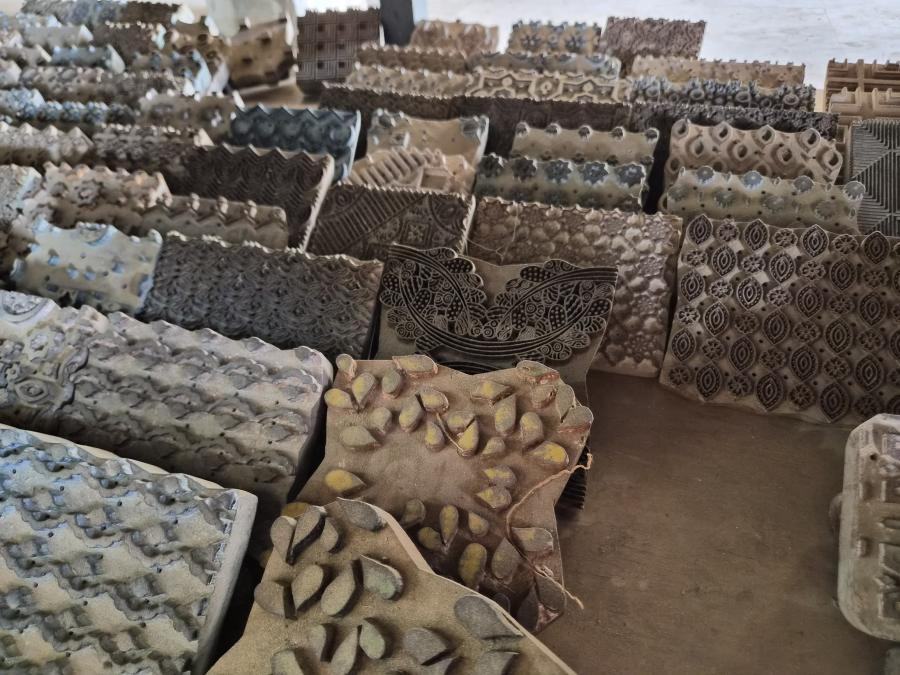
Hand-printed clothing is made by pressing carved wooden blocks dipped in dye onto fabric, one impression at a time. Each block is placed manually, so small offsets and variations between pieces are normal and signal that a person made it rather than a machine. Techniques like Ajrakh, Sanganeri, and Jamdani each have their own visual character. The result is a garment with depth and texture you do not get from digital printing on synthetic fabric.
Can hand-printed clothing look professional in an office?
Yes, if you choose the right cut and pair it with structured pieces. A hand-printed shirt buttoned under a blazer, or printed wide-leg trousers with a plain white top, reads as intentional rather than casual. Stick to one printed piece per outfit and keep everything else solid. Neutral shoes and simple accessories let the print carry the look without tipping into costume.
How do you care for hand-printed garments?
Wash hand-printed clothing in cold water on a gentle cycle or by hand, and turn the garment inside out first. Avoid bleach and harsh detergents. Line dry in shade rather than tumble drying, since heat can fade natural dyes faster. Iron on the reverse side at a moderate setting. Treated this way, hand-printed cotton holds its color and structure through years of regular wear.
What should you look for when buying ethical workwear?
Check the fabric composition first. Brands that share supply-chain transparency, name their printing methods, and explain where garments are made give you something concrete to evaluate. Price, sizing, and return policy matter too, so compare cost per wear rather than sticker price alone.
How can you build a versatile work wardrobe with printed pieces?
Start with two or three hand-printed tops or bottoms in colors that match what you already own. A printed shirt works with plain tailored trousers; printed wide-leg trousers work with a solid white or navy top. Choose pieces that transition from desk to dinner without a change. Noble Misfit designs clothing meant to be worn daily, not saved for occasions, so each piece earns its place across work, weekends, and everything between.


